

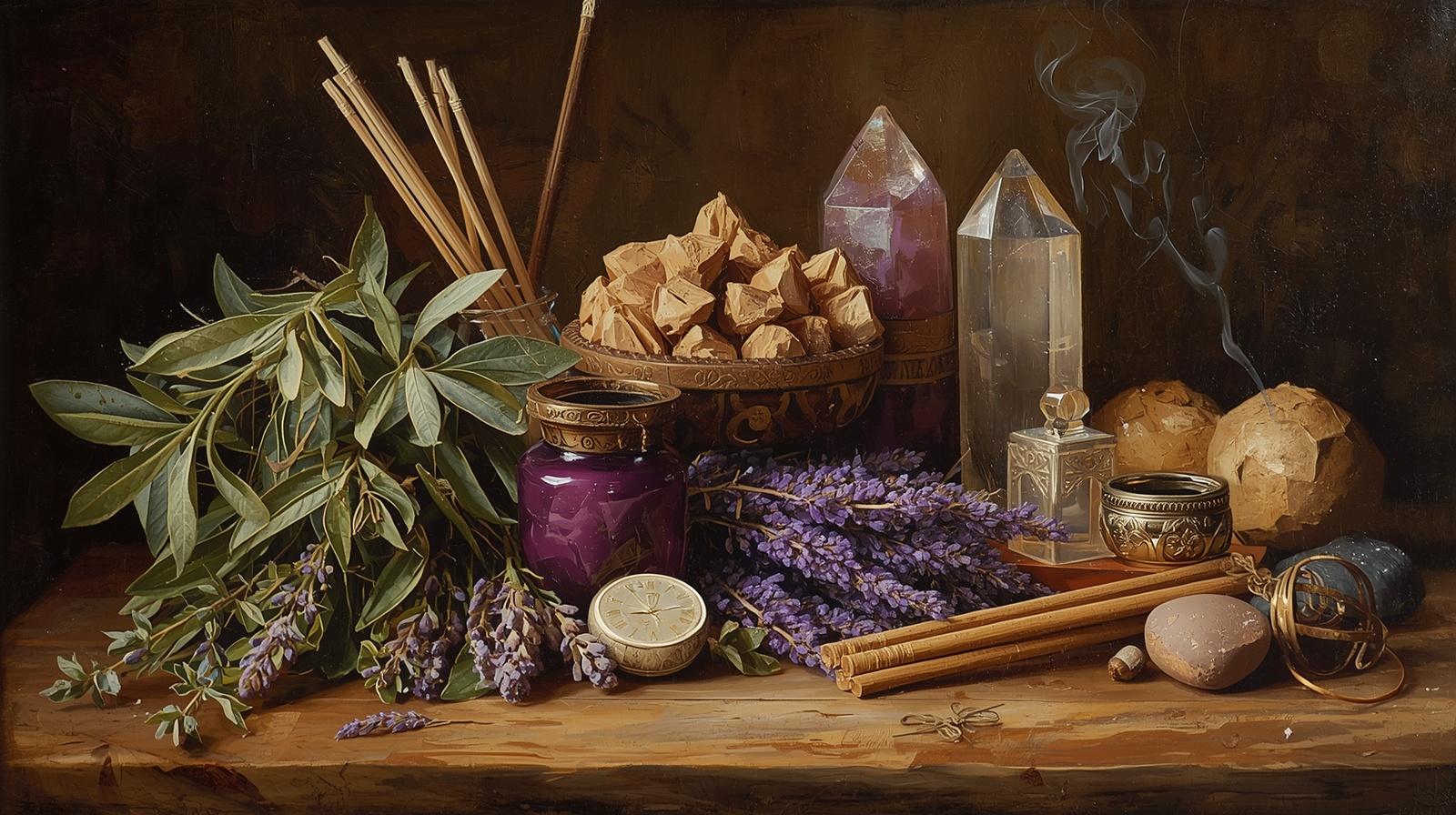
Oils, herbs and incense are optional objects in a reflective practice—not proven tools for developing psychic powers. You may enjoy a fragrance or attach personal meaning to a plant. Neither establishes that it improves predictions, strengthens an energy field or treats a health problem.
This guide focuses on choosing a setting, evaluating product claims and respecting other people’s comfort. It does not provide herbal doses, essential-oil recipes or instructions for inhaling smoke.
Keep three different ideas separate
- Preference: “I enjoy this fragrance” describes your experience.
- Symbolism: “This plant reminds me of a quality I value” describes a meaning you assign.
- Evidence: “This product improves psychic accuracy or treats anxiety” makes a claim that needs suitable evidence.
A pleasant ritual does not establish the third claim. Avoid using phrases such as “neuroscience proves” or “regulates the nervous system” as substitutes for a relevant study. Research about one ingredient, preparation or health outcome would not automatically apply to a different blend or to psychic ability.
Understand what you are choosing
Essential oils
Check the actual product and its intended use, rather than relying on a spiritual label. An oil sold for fragrance is not automatically suitable for skin or ingestion. Poison Control explains that essential oils can cause skin reactions and some can be poisonous when swallowed or absorbed through the skin.
Do not swallow essential oils for intuition, add them to drinks or improvise skin preparations from this article. Keep products secured away from children. For an exposure or possible poisoning in the United States, contact Poison Control at 1-800-222-1222 or use its website for immediate guidance.
Herbs and plant materials
A decorative herb, a culinary ingredient, a concentrated extract and a supplement are not interchangeable. Spiritual symbolism does not establish a safe dose or route of use. You can choose a drawing or photograph of a plant instead of consuming, burning or handling it.
Mugwort deserves particular caution because it is often promoted in dream-related content. NCCIH reports limited human research, insufficient evidence about oral or topical safety, and advises against use during pregnancy. Speak with a healthcare professional before using herbal products alongside medication. Our herbs and psychic-ability claims guide explores this distinction further.
Incense
Smoke is not evidence that a room or person has been cleansed. The EPA identifies burning incense as a source of indoor particles and recommends ventilation when it is burned indoors. Ventilation should not be described as making smoke harmless.
A smoke-free option is straightforward: do not burn anything. It avoids introducing incense smoke and removes the need to manage an ember during a session. Do not interpret coughing, irritation or feeling unwell as a spiritual release.
A reflective setting without added exposure
Want a visual reminder?
Use a plant photograph or a drawing.
You can explore symbolism without consuming or burning the plant.
Want a clear beginning?
Open a notebook and write one question.
No fragrance or special object is required.
Sharing the space?
Make scent-free the easy option.
Respect another person’s preference without asking them to defend it.
Facing a product claim?
Separate enjoyment from a promise of effects.
Check the actual preparation and intended use; choosing nothing is valid.
Popular names are not a prescription
Lavender, frankincense, sandalwood, clary sage, rosemary and bay leaf appear in spiritual product marketing. A name alone tells you neither the complete ingredients nor whether a preparation is suitable for you. This article does not rank them by “psychic strength” or promise that one produces confidence, dreams, grounding or clairvoyance.
Ask what a seller is actually promising. Is it simply a fragrance, or are they claiming protection, healing or a necessary spiritual upgrade? Be cautious when fear of a blockage becomes a reason to buy repeatedly.
A scent-free reflection routine
- Choose an ordinary place. A chair at home or a comfortable spot in the yard is enough. You do not need a dedicated room.
- Pick one question. Write down something practical you want to consider, without demanding a special message.
- Notice what you know and what you assume. Put facts, feelings and guesses in separate sentences.
- Choose a modest next step. You might gather information, ask a question or decide to wait.
- Finish without grading yourself. No vision, sensation or prediction is required.
This is an optional journaling structure, not a tested method of increasing psychic ability. You can stop or change it whenever you want.
For readers: make the client’s choice easy
Offer scent-free appointments without asking clients to disclose a diagnosis or defend their preference. Ask before introducing fragrance into a shared space; do not assume that an online client wants instructions to use it at home.
Keep products separate from the price and validity of a reading. Do not tell someone that they must buy your oil, herb bundle or incense to remove a threat or receive a useful session. The reader ethical-boundaries guide covers consent and limits in more detail.
Bottom line
You can value a ritual without claiming that it works for everyone. Start with comfort, clear labeling and the freedom to choose nothing at all. A reflective practice does not need a shopping list.
16 frequently asked questions
1. Which essential oil is best for psychic development?
This guide does not recommend an oil for producing psychic ability. Enjoying a fragrance or finding a ritual meaningful does not establish better predictions, and scent is optional.
2. What is the difference between symbolism and evidence?
Symbolism describes a meaning you associate with an object. Evidence is needed for claims about measurable effects; a meaningful association alone does not prove protection, healing or improved accuracy.
3. Does natural mean harmless?
No. A natural label does not establish that a product or route of use is safe. Read the actual ingredients and intended-use information rather than relying on a spiritual or natural description.
4. Can I swallow essential oils to improve intuition?
Do not ingest essential oils for intuition or add them to drinks on the basis of spiritual claims. Misuse can cause poisoning; this article provides no ingestion instructions.
5. Is a fragrance oil automatically suitable for skin?
No. Intended uses differ, and skin reactions can occur. Do not improvise a skin preparation from this guide or assume that a product sold for scent is suitable for application.
6. What should I do after a possible essential-oil poisoning?
In the United States, call Poison Control at 1-800-222-1222 or use its website for prompt, situation-specific guidance. Do not rely on a spiritual reading to assess an exposure.
7. Are a dried herb and its concentrated extract interchangeable?
No. The form, ingredients and intended use matter. A decorative plant material, food ingredient, extract and supplement should not be treated as the same preparation.
8. Is mugwort proven to improve psychic dreams?
This guide does not establish that claim. NCCIH reports limited human research and important safety uncertainty; a dream-related marketing claim is not a reason to assume a product is suitable.
9. Is mugwort suitable during pregnancy?
NCCIH advises against mugwort during pregnancy. Do not treat ritual use or natural labeling as a safety assurance, and consult a healthcare professional about herbal products.
10. Does incense smoke prove that a room has been cleansed?
No. Burning a product does not establish spiritual cleansing. Incense introduces particles into indoor air; a smoke-free routine avoids that source.
11. Does opening a window make incense smoke harmless?
No. Ventilation should not be described as eliminating all risk. Choosing not to burn incense is a straightforward way to avoid adding its smoke.
12. What can I use instead of scented products?
Try a notebook, plant photograph, ordinary object or quiet pause. You can make time for reflection without fragrance, skin exposure, smoke or a shopping list.
13. Do I need a dedicated spiritual room?
No. A comfortable chair at home or an ordinary spot in the yard can be enough for a writing exercise. Privacy, comfort and a manageable question matter more than elaborate equipment.
14. Should a client explain a medical condition to request a scent-free session?
No. Make the option easy to choose without requiring a diagnosis or personal justification. Ask before introducing fragrance into a shared space.
15. Can a reader require clients to buy oils or incense?
Do not frame a product purchase as necessary to remove a threat or make a reading valid. Keep sales pressure separate from the client’s freedom to choose an ordinary scent-free session.
16. What can I write during a scent-free reflection?
Choose one practical question, distinguish facts from feelings and guesses, and note a modest next step. The exercise is optional and does not require a vision, sensation or prediction.
This is a thoughtful overview linking olfactory cues to emotional memory and attention. The olfactory pathways connect directly with limbic structures involved in memory and affect, which helps explain why certain smells can rapidly shift mood and recall. The emphasis on consistency and safety is wise. 🌿
I appreciate the reminder to respect the body and use moderation. For folks new to scents, testing a tiny amount first and choosing what actually relaxes you is important. This keeps intuitive practice safe and steady without forcing anything. Nice, grounded advice here.
Lovely and sensible writing here. The ritual of lighting incense or using a particular oil can act as a clear boundary marker between daily busyness and inner listening time. I found that using sandalwood before reflection helped me stay grounded and more attentive to small, intuitive nudges. ✨
I enjoyed how the article frames scent as an anchor rather than a shortcut. From a cognitive-science view, repeated association of a scent with a relaxed, reflective state can create robust contextual cues via synaptic plasticity, lowering cognitive load and improving access to subtle impressions. The caution against talismanic thinking is important and encouraging for sustainable practice. 🌱
This write-up feels calming and practical, thanks for sharing! I appreciate how it separates ritual from magical thinking and focuses on nervous system states. Using a consistent scent as a cue makes so much sense for building gentle habits and clearer inner noticing. 🌿
Nice synthesis of psychology and tradition. From a learning perspective, the repeated pairing of a scent with a relaxed introspective state functions like associative conditioning; over time that cue should lower arousal and free cognitive bandwidth for subtle perception. Thoughtful, evidence-aligned guidance here. 🧠
I really liked the part about using scent to create a safe space before journaling. That small habit makes it easier for me to slow down and notice feelings I usually miss. I’ll try keeping one oil by my notebook. 😊
Such a lovely, clear piece! It makes intuitive practices feel accessible instead of mysterious. I’m excited to pick one scent and use it before meditation each day to see how my inner noticing changes. Simple steps like this really encourage steady practice. 🌸
Great article that balances tradition and common sense. Practical tip: choose one scent and use it consistently at the same time of day, like before journaling or sleep. Also keep a window cracked if using smoke, and consider a diffuser for sensitive noses. 👍
This felt friendly and useful for beginners. My tip: start with lavender or rosemary because they’re gentle and easy to find, and use the same scent for a few weeks to notice subtle changes. Always prioritize comfort and health, and take it slowly. 😊