

A place can be sacred, moving or historically important without being a proven amplifier of psychic ability. Its meaning may come from living religious practice, community relationships, memory, landscape or archaeology. Those meanings deserve attention on their own terms.
Keep documented context separate from personal interpretation, approach visits respectfully and consider ways to learn without traveling.
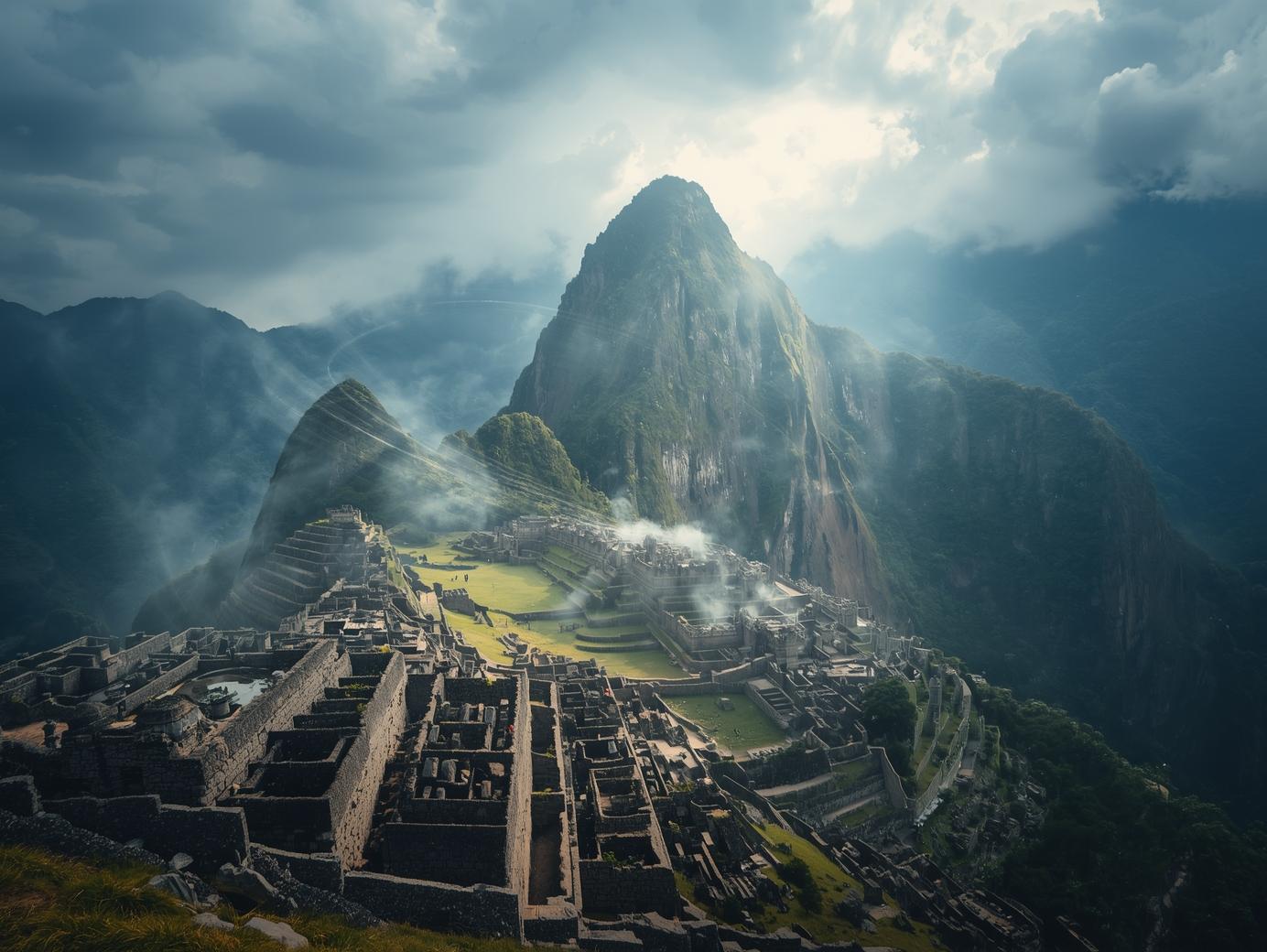
The cover is conceptual artwork showing mountain ruins and atmospheric effects. It is not a documentary image or evidence of a measured energy field.
Start with whose place it is
Before asking what a location might do for you, ask who cares for it and how they describe it. A living sacred place is not simply a backdrop for a visitor’s private ritual. Access for sightseeing does not automatically authorize ceremonies, commercial readings, filming or entry to restricted areas.
Do not combine different Indigenous, religious and archaeological traditions into one universal story about ley lines or psychic portals. Where a community has chosen not to share knowledge or access, respect that limit rather than trying to infer permission from a feeling.
Three examples, three different kinds of context
Sedona: landscape and modern vortex narratives
Sedona’s visitor literature discusses vortex beliefs associated with its red-rock landscape. That is evidence of a spiritual-tourism narrative, not verification that a location transmits healing energy or improves clairvoyance.
If the imagery or landscape interests you, keep that interest separate from promises made by a guide or retreat seller. Check current land-manager guidance before making travel plans; a promotional vortex map is not a substitute for access, weather or trail information.
Maunakea: cultural significance and real altitude risks
The University of Hawaiʻi at Hilo’s Maunakea heritage material describes cultural context and responsibilities when approaching the mountain. A visitor’s spiritual interpretation should not displace that context.
Its visitor guidance also addresses altitude, health considerations and access. Do not describe lightheadedness or other symptoms at elevation as proof of spiritual activation. Consult current official guidance and appropriate medical advice before a high-altitude visit; this article is not a summit itinerary or an assessment of your fitness to travel.
Göbekli Tepe: archaeology with room for uncertainty
UNESCO describes Göbekli Tepe as a Neolithic site with monumental structures and distinctive T-shaped pillars, dating to approximately 9600–8200 BCE. Its account discusses probable ritual uses while retaining uncertainty about their precise nature.
That archaeological importance does not establish claims about past-life memories, portals or a visitor receiving ancient messages. Distinguish the evidence for a structure’s age and form from an interpretation of what you feel while viewing it.
Record experiences without inventing evidence
“I felt moved” is a report about your experience. “This proves the land stores prayers” adds a claim about how the world works. The first does not establish the second.
If you keep notes, record the surroundings and what you noticed before assigning a cause. Avoid presenting imagined scenes as recovered history or unattributed stories as documented testimony. Do not assume that another visitor shares your experience, and never pressure someone to report a vision.
Research on wellbeing, landscapes or ordinary physical phenomena does not automatically substantiate psychic claims. A source should support the specific statement attached to it, not just mention a related topic.
Four checks before planning an activity
1. Context
Whose place is this, and how do its custodians describe it?
Start with their resources rather than a universal energy story.
2. Permission
Is this specific activity allowed?
Visitor access does not automatically cover filming, rituals or paid readings.
3. Conditions
What do current official access and safety notices say?
A spiritual interpretation does not override closures or physical risks.
4. Impact
Could the activity disturb people, objects or the landscape?
Respect restrictions, leave objects in place and choose learning from home when appropriate.
Visitor choices that protect the place
The National Park Service’s archaeological-visit guidance emphasizes leaving artifacts in place and avoiding damage or disturbance. Apply the actual rules of the location you visit; one site’s permitted activities do not establish another’s.
- Check access and closures through the site’s current official resources.
- Stay within permitted areas and do not touch, move or collect objects.
- Ask before photographing people or ceremonies; follow restrictions without arguing.
- Do not leave offerings, plant seeds, stack stones or light anything unless the relevant custodians expressly permit it.
- Do not publish sensitive directions or encourage others to bypass restrictions.
There is no universally appropriate offering. Quietly following the rules may be the most respectful contribution a visitor can make.
Learning from home is a valid option
You do not need an expensive journey to have a reflective practice. Read materials published by cultural custodians, museums or site managers. Use authorized photographs or virtual resources as learning aids, not as proof that you have remotely entered a restricted spiritual space.
A modest home corner or your own yard can provide a place to sit and think. The grounding guide offers optional attention exercises. You need not reproduce another community’s ceremonies or claim that your room has become a vortex.
For readers offering retreats or remote sessions
State exactly what you are providing, what permissions are required and what costs are included. Do not promise contact with ancestors, healing or privileged cultural access. A claim that you sensed permission is not a substitute for actual authorization.
Our ethical-boundaries guide applies here too: disclose uncertainty, respect refusal and do not turn a client’s disappointment into pressure to buy another experience.
16 frequently asked questions
1. Does feeling moved at a sacred place prove psychic energy?
No. A powerful experience does not establish its cause or verify a supernatural mechanism. You can value the experience without presenting your interpretation as a measurement.
2. Does this guide rank sites by spiritual power?
No. It discusses cultural context, evidence and visitor conduct. It does not report firsthand psychic tests or a measured energy ranking.
3. Whose guidance should I consult before visiting?
Start with the people responsible for the place and its current official visitor resources. Learn how custodians describe the site, and check permissions rather than assuming that a tourism description covers every activity.
4. Does ordinary visitor access permit a ceremony or commercial reading?
Not automatically. Filming, ceremonies, group activities and paid services may have separate restrictions. Obtain the relevant permission before planning them.
5. Can a dream or spiritual invitation override a closure?
No. A feeling or claimed message does not authorize entering restricted areas or private land. Respect the actual access rules and the decisions of those responsible for the site.
6. Is there a universally appropriate offering?
No. Do not assume flowers, stones, seeds or other objects are welcome. Follow the specific custodians’ guidance; when permission is unclear, leave nothing.
7. May I collect a small stone or artifact as a keepsake?
Do not assume collecting is permitted. Leave objects where they are and follow the site’s rules; even small changes can disturb an archaeological or culturally important place.
8. Can I photograph ceremonies or visitors?
Ask before photographing people or ceremonies and follow any site restrictions. Being in a publicly accessible area is not a reason to ignore the wishes of the people involved.
9. What do Sedona vortex descriptions establish?
They document a spiritual-tourism narrative associated with the landscape. They do not by themselves verify healing energy or improved psychic ability, and they are not a substitute for trail or access guidance.
10. Why does the Maunakea example discuss altitude?
Cultural meaning does not remove physical risks. Review current official visitor guidance and appropriate medical advice; do not treat symptoms at elevation as proof of spiritual activation.
11. What does archaeology establish about Göbekli Tepe?
The cited UNESCO account describes Neolithic monumental structures and T-shaped pillars, with probable ritual uses. That evidence does not establish claims about portals, past lives or messages received by visitors.
12. How can I record an experience responsibly?
Write what you observed and felt, then label any explanation as an interpretation. Do not turn an imagined scene into recovered history or assume another visitor had the same experience.
13. Do I need an expensive trip for a reflective practice?
No. Read materials from cultural custodians, museums and site managers, or use authorized virtual resources. Quiet reflection at home does not require travel or claims of remote access.
14. Does the cover document a real energy field?
No. It is conceptual artwork with atmospheric effects, not a measurement or documentary record. Use official resources for documentary images and current visitor information.
15. What should a retreat provider explain before booking?
Clarify the actual service, included costs, required permissions and limits. Do not promise healing, ancestor contact or privileged cultural access without a legitimate basis for the claim.
16. What if I feel dizzy or unwell during a visit?
Stop the activity and seek appropriate assistance, following local safety and medical guidance. Do not reinterpret symptoms as a spiritual achievement, especially at altitude.
This article offers insightful information about sacred spaces and their historical significance. I found the reference to PMC’s research on therapeutic landscapes particularly interesting. It illustrates a fascinating intersection of science and spirituality.
‘Natural amplifiers’? Sounds like the next tech trend in spirituality. Maybe we can market it as ‘Spiritual Boosters’ for those needing quick enlightenment fixes. 🙄
‘Wi-Fi for the soul’? Really? I mean, if my inner wisdom could buffer like my internet connection, I’d probably still be waiting for enlightenment! 😂
‘Tuning into a radio’? This analogy makes so much sense! Sacred sites really do seem to amplify spiritual signals, making them perfect for introspection and connection with higher frequencies!
Interesting read! But isn’t it just a little too mystical? How can we be sure that these feelings aren’t just imagined? Maybe we’re projecting our own emotions onto these places? 🤷♂️
@CuriousCat22 You make a valid point! While personal experiences matter, it’s hard to ignore that many people report similar sensations in these locations.
‘The land remembers what you pray?’ That’s profound! The idea that energy lingers where we express our intentions is beautiful—and perhaps explains why some places feel so significant to us.
@PhilosopherDude Such an intriguing concept! It’s as if every prayer or wish leaves an imprint on the earth itself—like stories etched into stone.
While I appreciate the poetic nature of this piece, I can’t help but think it’s all a placebo effect. People feel things because they expect to, not because there’s actual energy at these sites. 🤔
I absolutely love this article! It beautifully captures the essence of spiritual places and how they resonate with our energies. The descriptions of Sedona and Mauna Kea are especially captivating. 🌌✨