

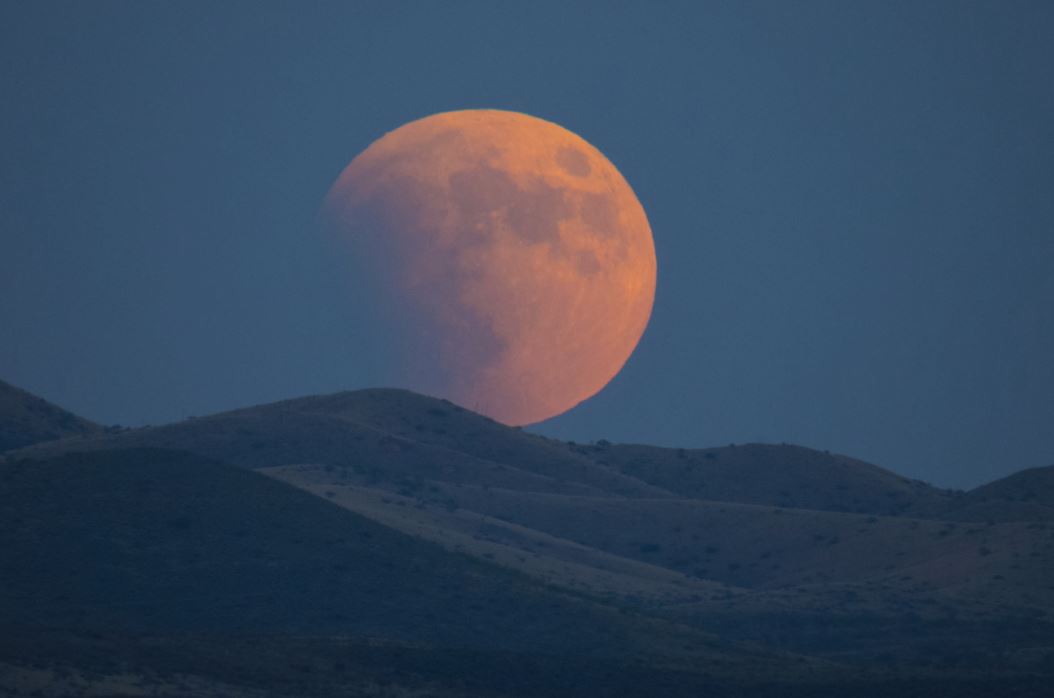
The Moon can inspire curiosity and reflection without becoming an authority over your decisions. Its changing appearance is an astronomical phenomenon. The meaning you attach to it—as a symbol of change, rest or renewal—is a separate, personal interpretation.
Keeping both ideas in view lets you enjoy the night sky without assuming that a lunar phase predicts a relationship, controls your choices or guarantees a desired outcome.
What the phases actually show
NASA’s guide to Moon phases explains that moonlight is reflected sunlight. Half of the Moon is illuminated by the Sun; as it travels around Earth, we see different amounts of that illuminated half.
The cycle runs through new Moon, waxing crescent, first quarter, waxing gibbous, full Moon, waning gibbous, third quarter and waning crescent. It repeats about every 29.5 days. That phase cycle is slightly longer than the Moon’s roughly 27.3-day orbit relative to the stars.
A real influence does not establish every claimed influence
The Moon does have measurable physical effects. NASA’s explanation of tides describes the gravitational relationships among Earth, the Moon and the Sun that help produce ocean tides.
That is not evidence that a full Moon amplifies psychic ability, that your mood must follow a phase or that lunar rituals bring a specific person back into your life. Those are different claims and cannot borrow proof from the existence of tides.
Use symbolism as a choice, not a rule
You might associate a crescent with beginning something, or a waning Moon with simplifying a commitment. You are making an analogy, not discovering a universal instruction.
Different religious, artistic and spiritual traditions discuss the Moon in different ways. When learning about one, look for a named tradition and a reliable source rather than assuming that all cultures share a single lunar story. An unattributed tale should not be presented as established history.
An optional four-part reflection routine
These original prompts use the phases as reminders, not rules or a proven way to manifest outcomes. Read in order, or choose the prompt you need today.
1. New Moon: choose
What is one manageable intention you want to act on?
Write: one action within your control.
2. Waxing Moon: practise
What small step fits your time and resources?
Write: when and how you will try it.
3. Full Moon: review
What actually changed? What evidence supports your impression?
Write: one observation, including anything that did not work.
4. Waning Moon: adjust
What can you simplify, postpone or stop?
Write: one realistic adjustment, without blaming yourself.
You can use these prompts on any convenient dates. Missing a phase is not a failure. No supplies or paid cleansing are required.
Make intentions practical
For example, “I want more space in my week” can become “I will review one optional commitment and decide whether to keep it.” That is an action you can assess, unlike a promise that lunar energy will rearrange your life. Use the notice, interpret and check approach to keep an observation separate from the story you attach to it.
If something does not work out, consider the circumstances, available support and what remains within your control. Do not assume that doubt, an imperfect ritual or the wrong phase caused the outcome.
The Moon in tarot is a separate interpretive topic
If a tarot deck includes a Moon card, read the deck’s own guide and identify the interpretation you are using. A picture of the Moon in a card is not an astronomical forecast or proof of someone else’s intentions.
You can use the imagery to ask a question—such as “What do I still need to clarify?”—without turning an uncertain situation into a prediction. Our guide to reflective tarot reading explains that distinction in more detail.
Enjoy observing without disrupting your routine
Look from a safe, accessible place and dress for the conditions. NASA’s Moon-viewing tips offer a practical starting point for observing different phases.
You do not have to stay awake late, travel somewhere isolated or continue a practice that makes you uncomfortable. If the sky is cloudy, the view is unavailable or you would rather rest, the activity can wait.
Keep wonder and judgement together
The Moon can be beautiful without sending you instructions. Let a personal ritual support attention or reflection, while using relevant facts and appropriate professional advice for consequential decisions.
If journalling turns into harsh self-criticism, shorten the exercise or stop. Our guide to bounded self-reflection offers prompts that focus on a specific situation rather than labelling your whole personality.
17 frequently asked questions
1. Why does the Moon appear to change shape?
We see different portions of its sunlit half as it travels around Earth. The Moon itself is not changing shape during the phase cycle.
2. How long does a complete phase cycle take?
About 29.5 days, from one new Moon to the next. A phase calendar can help you follow the sequence without making it a deadline for personal decisions.
3. Does the Moon’s effect on tides prove psychic claims?
No. A physical explanation of ocean tides does not establish that a phase increases psychic ability, guarantees manifestation or determines a person’s emotions. Each claim needs its own evidence.
4. Do I have to start an intention at the new Moon?
No. The new Moon can be a personal reminder, but you can begin whenever the action is useful and practical. Do not postpone an important decision solely to match a lunar date.
5. What makes a useful lunar intention?
Choose an action you can take, not an outcome you expect the Moon or another person to deliver. For example, decide to review one optional commitment rather than ask for your entire week to change.
6. How do I use the four-part reflection routine?
Choose a manageable action, practise it, review what happened and adjust your next step. The phases are optional labels for that process; you can also use a weekly calendar.
7. What should I write during the review stage?
Record what you did, what happened and what remains uncertain. Include setbacks and alternative explanations, not only events that fit your expectations.
8. What if I miss a phase or cannot see the Moon?
You do not need to correct anything or restart a ritual. Reflect on another day, consult a phase guide or skip the activity. Clouds and scheduling conflicts are not personal failures.
9. Do I need crystals, candles or special supplies?
No. A notebook, an accessible notes app or a few quiet minutes are enough for these prompts. Buying objects does not make an intention more valid or guarantee results.
10. Does every tradition assign the same meaning to Moon phases?
No single interpretation should be presented as universal. Identify the tradition and source you are learning from, and distinguish documented practices from a writer’s personal analogy.
11. Is the Moon tarot card the same as a lunar phase?
No. A tarot card is an interpretive image within a deck, while a lunar phase describes the Moon’s appearance from Earth. Use the deck’s guide without treating the image as an astronomical prediction.
12. Can a Moon ritual guarantee a relationship outcome?
No ritual can guarantee another person’s feelings, consent or choices. Use reflection to clarify your own next step and respect what the other person communicates.
13. What if my intention does not work out?
Review the circumstances, your actions and available support. An unwanted result does not show that you doubted too much, used the wrong phase or need to pay to remove a blockage.
14. Can I observe the Moon without staying up late?
Choose a viewing opportunity that fits your routine and a safe, accessible location. You can also use a reliable guide when observation is inconvenient. Rest and comfort take priority over completing the activity.
15. How can I keep journalling from becoming self-criticism?
Describe one situation and one possible next step rather than judging your character. Set a short limit and stop if the exercise leaves you feeling pressured or overwhelmed.
16. Should I schedule major decisions around a Moon phase?
Use relevant facts, practical deadlines and appropriate professional advice for consequential decisions. A symbolic date can be a preference, but it should not override necessary action or evidence.
17. How can I tell whether this routine is useful for me?
Look for a practical benefit such as a clearer next step or a commitment you can realistically change. If it adds pressure, expense or confusion, adapt it or leave it out.
This article captures the mystical essence of the moon beautifully. The integration of historical, religious, and mythological contexts is particularly enriching. The anecdote about the moon’s rivalry with the sun and its subsequent quest for place and purpose adds an imaginative layer that resonates with the human journey for meaning and significance. Furthermore, the connection to tarot and the moon’s symbolic representation of creativity and intuition is intriguing, offering readers a thought-provoking perspective on how lunar cycles align with our emotional experiences. Truly enlightening!
I’ve always found the moon to be a source of fascination, but this article delves into its symbolism and cultural significance in a way that has deepened my appreciation. The interplay between science and myth, especially the story of the moon negotiating its place in the universe, adds a rich narrative that captivates the imagination. The section on how the moon’s energy can be harnessed for personal reflection and growth is especially compelling. It’s a reminder of the power and beauty that lies in the natural world, waiting to be discovered and understood. A truly inspiring read!
It’s fascinating to observe how different cultures have revered the moon and attributed diverse meanings to it. The legend about the moon challenging the sun adds a compelling narrative to its perceived mythology.
The narrative about the moon and its interaction with the earth and sun enriches our understanding of its mythological significance. The correlation with tarot readings adds depth to the lunar influence.
Indeed. The historical and cultural perspectives provided in the article give us a broader understanding of how the moon has been perceived through the ages.
I agree. The intertwining of myth and reality in the article enhances the reader’s appreciation of the moon’s multifaceted role in human culture.
The connection between the moon and water, both scientifically and symbolically, is well articulated. It is intriguing to note how ancient knowledge anticipated modern scientific discoveries.
The article provides an interesting overview of the moon’s symbolism and its impact on various aspects of life and culture. The integration of mythology and tarot adds a multidimensional perspective to how we perceive the moon’s influence.
The article’s discussion about the moon’s role in tarot readings is thought-provoking. It emphasizes the moon’s influence on our inner world and personal growth, aligning well with its physical impact on the natural world.